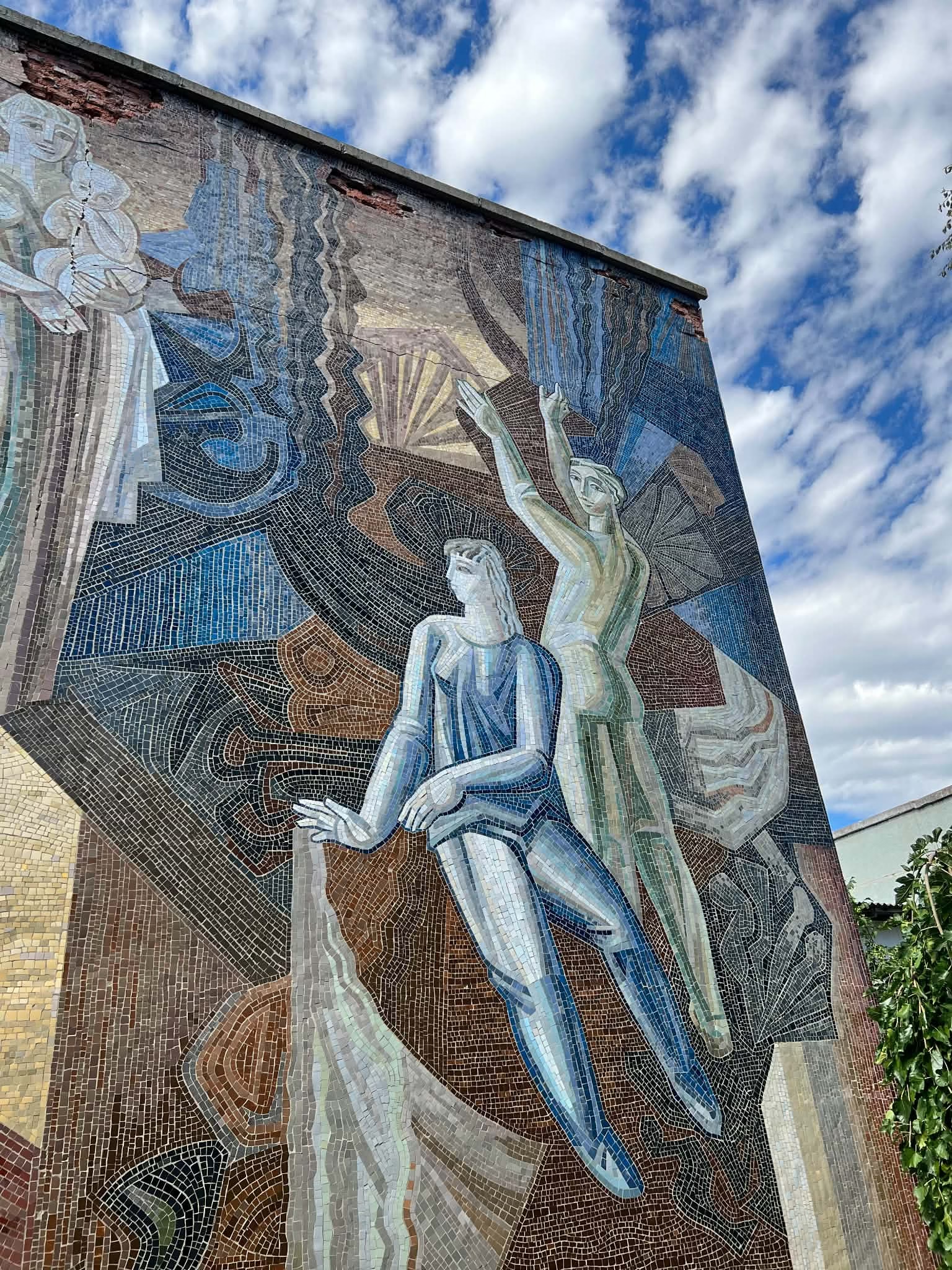
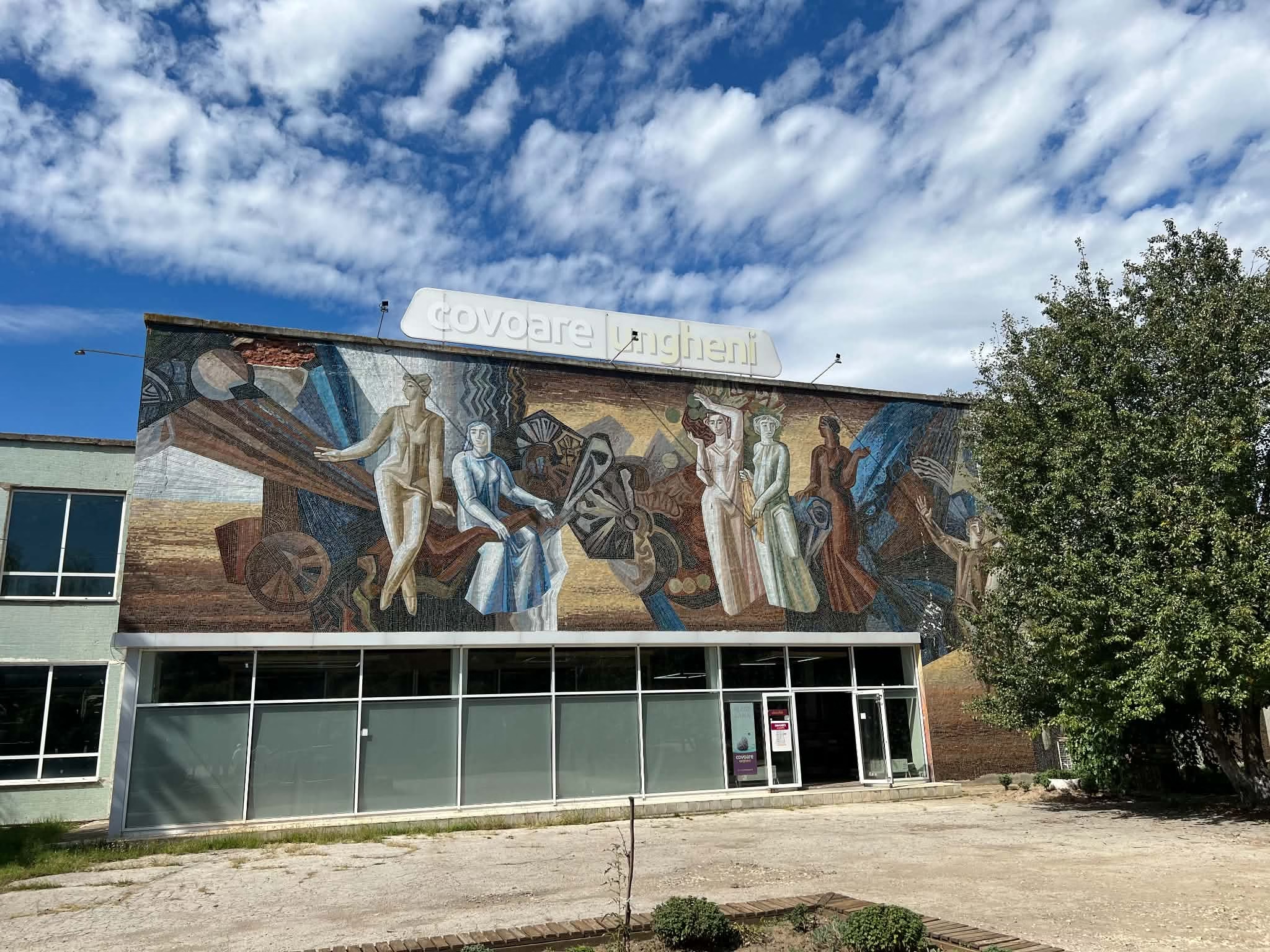
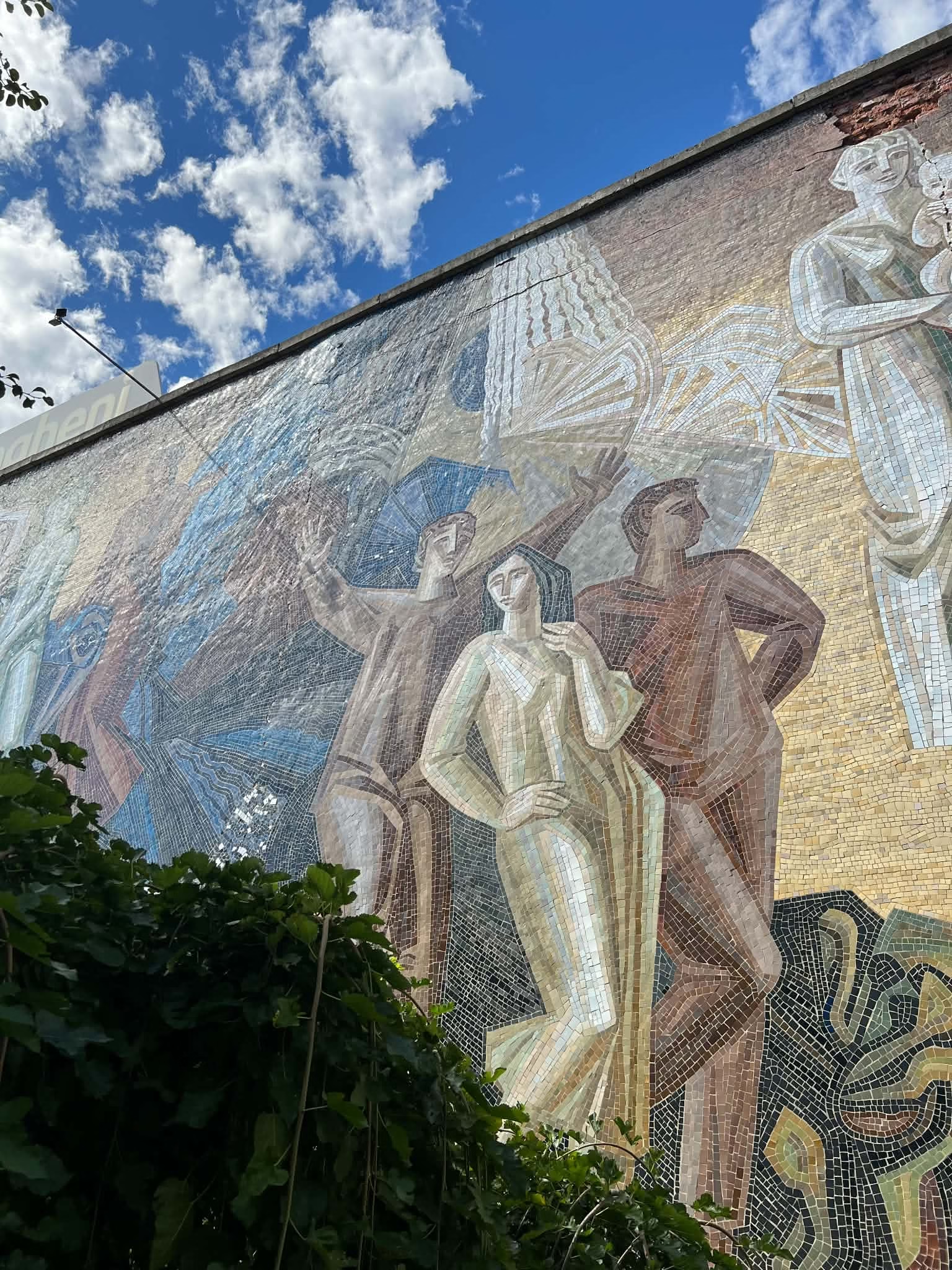
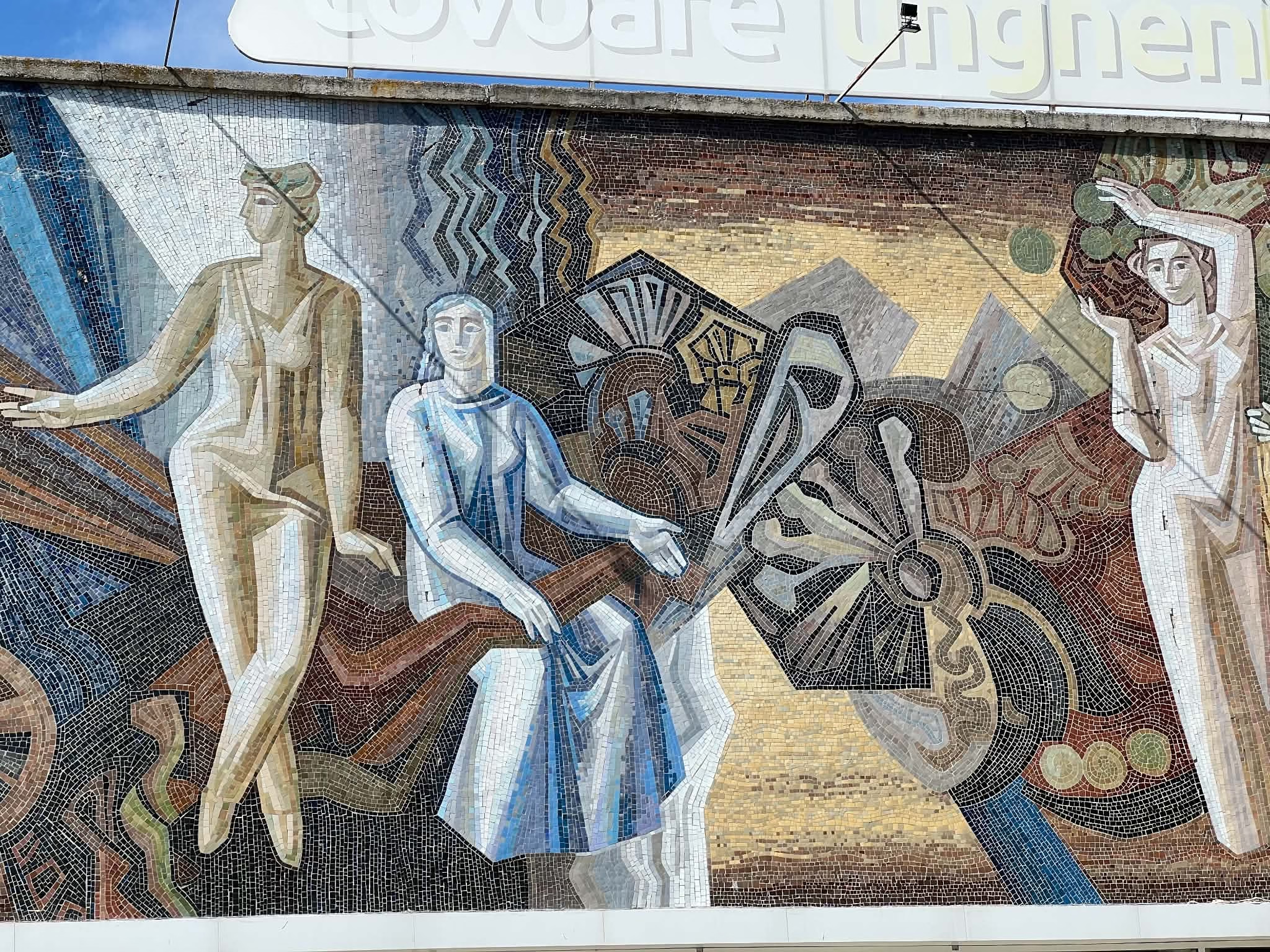
On the facade of the carpet factory in Ungheni, a town on the Prut river on the border with Romania, a large mosaic of figures in blue, ochre and brown still faces the street. Above it, the sign reads „Covoare Ungheni”, which means „Ungheni Carpets”.
The factory
According to the factory’s own history and the Ungheni tourism website, carpet production in Ungheni started in 1980. The company says it was privatized and modernized in 1998, and it now exports carpets to Europe, the United States and Japan. The site covers about six hectares under a single roof.
The mosaic
Romanian Wikipedia lists the facade mosaic under the name „Covorul vieții”, which means „The Carpet of Life”. We could not find reliable sources for its exact year, artist or size, so we do not claim any here. If you know its story, please tell us in the comments.
Soviet monumental mosaics
Large public mosaics appeared across the USSR from the 1930s, were stopped under Khrushchev, and came back under Brezhnev about a decade later, according to the Kathmandu and Beyond mosaic survey. They were made of very small pieces of glass or ceramic, and only artists in the Artists’ Union of the USSR were commissioned by the state, with each design approved by a committee. New ones stopped with the dissolution of the USSR in 1991. Across Moldova, in cities such as Chișinău, Bălți and Cahul, many have been left to the weather, and some have been lost during repairs.
Have you seen this mosaic? Tell us your story in the comments.
Sources: Covoare Ungheni (covoare.md); Ungheni tourism website; Kathmandu and Beyond, „Mosaics of the former USSR”; Michael Harrison, „Soviet Mosaics – Bălți – Moldova”.